1421 stories
·
0 followers

Overhaul of public lands grazing regulations seeks to cut public involvement

1 Share

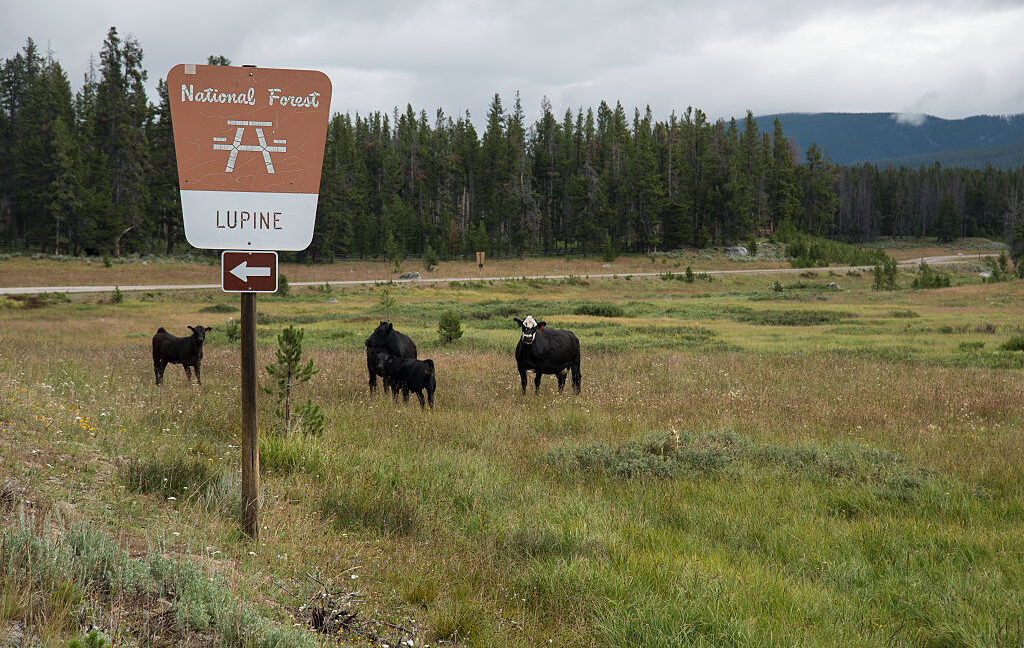
The federal government is rewriting its rules governing ranching on public lands to increase the number of cattle, sheep, and other livestock grazing on 155 million acres in the West, an area twice the size of New Mexico.

Public lands grazing is overseen by a nearly century-old system that heavily subsidizes some of the wealthiest Americans while doing little to address its harms to the environment, ProPublica and High Country News found last year.

Even though rangeland management experts say overgrazing has degraded public lands, the new rules being drafted by the US Department of the Interior’s Bureau of Land Management—the first overhaul since 1995—would instead expand the practice.

The proposed rules would also ratchet back public participation in the agency’s decisions to allow grazing on federal public lands. The BLM’s proposed updates would strictly limit who has a say and when they can object, eliminating many steps where the public has been able to observe and comment on decisions to issue or renew permits.

“They’re clearly trying to reduce involvement of anyone other than ranchers,” said one BLM employee who works on rangeland management.

The BLM did not respond to questions about the proposed regulations, which were released publicly in May and, after a period for public comment, will go back to the agency in mid-July for further review.

In a June news release announcing the action, the agency said it “reflects the Trump administration’s priority to reduce unnecessary regulatory burdens, promote productive working lands and strengthen local economies.”

ProPublica and High Country News spoke to multiple current and former BLM employees to gauge the impact of the proposed regulations. Some, like the BLM staffer who works on rangeland management, requested not to be named because they still are employed by the agency. The employees agreed that the updated regulations offer several concrete benefits, including a requirement that the agency study the ecological impacts of all uses of public lands—from timber harvesting and recreation to mining and oil drilling. The current rules limit such reviews to the livestock industry, where they have uncovered tens of millions of acres of damage due to overgrazing.

The regulations would also allow the BLM to handle low-level violations of grazing regulations more informally, avoiding potentially unnecessary fights between ranchers and regulators; clean up sections of the code that may be at odds with recent court decisions and laws; and offer the agency and ranchers more flexibility in how they manage the range, allowing for quicker decision-making responding to a local ecosystem’s needs.

Tim Canterbury, president of the Public Lands Council, a ranching trade group, in a news release called the update “a massive step forward.”

He said the existing regulations grew from the “cattle free by ’93” movement of the early 1990s that was hostile to ranching and aimed to rid public lands of livestock. “The resulting regulations all but ensured ranchers did not have the flexibility to take full advantage of the scientific and management advances that the industry has made over the last 35 years,” Canterbury said.

Other groups working on rangeland management say the regulations go too far in the opposite direction, tipping the scales toward ranchers. They point to proposals allowing ranchers to continue business as usual if they appeal agency decisions limiting grazing, threatening Native American tribes’ ability to graze bison and enshrining highly subsidized grazing fees. (ProPublica and High Country News found that in 2024 the federal government charged ranchers $284 million below market rate for the use of public lands.)

“We can expect considerably more places where cows and sheep are going to be and more damage,” said Josh Osher, public policy director of the Western Watersheds Project, a conservation group. “I think we see big impacts on wildlife.”

“Back to the Ronald Reagan years”

The livestock industry influenced the regulatory rewrite from both outside and inside the Interior Department.

The National Cattlemen’s Beef Association and Public Lands Council, two main trade groups, publicly celebrated their meetings with the secretaries of the Interior and Agriculture departments in the spring. Among their agenda items was a memorandum of understanding allowing the trade groups to give guidance to the departments, including on a “Grazing Action Plan” that involved updating regulations.

The groups did not respond to requests for comment. (The Western Landowners Alliance, which represents conservation-minded ranchers and landowners, said it’s still evaluating the regulations.)

Representatives of Native American tribes and conservation groups, meanwhile, told ProPublica and High Country News that the administration offered them no opportunity to provide input on the draft regulations before they were published.

They also take issue with the process due to the involvement of Karen Budd-Falen, a high-ranking official in the Interior Department and a long-time grazing advocate whose family is in the ranching business. She served in the first Trump administration and was barred from discussing grazing policy due to potential conflicts of interest. But after rejoining the department, she received an ethics waiver allowing her to work on grazing policy.

In December, Budd-Falen participated in a discussion about public lands management with Republican Sen. Cynthia Lummis of Wyoming. During that event, Budd-Falen called grazing regulations the issue that “probably was the closest to my heart” and gave a rare view into the effort to update them.

“You want to know what put the public ranchland out of business — it was Bruce Babbitt’s regulations,” she told Lummis, referring to President Bill Clinton’s Interior secretary from 1993 to 2001. “By the first of next year, you will see fully new regulations that don’t just fix a few of the Babbitt things. We went back to the Ronald Reagan years and are putting back in those regs.”

“I am so excited about these regulations,” she said.

Native American tribes that manage bison herds say Budd-Falen’s efforts to aid ranchers could hurt their operations. Several rancher and stock grower associations in Montana, which at one time were represented by Budd-Falen, have railed against a conservation group called American Prairie that uses permits to graze bison herds to revitalize local ecosystems. The ranchers worry this will cost them subsidized leases and that the bison could spread disease to their cattle.

The Trump administration has sided with the ranchers in the dispute — first by revoking American Prairie’s permits and then by redrafting grazing regulations to mandate public lands livestock operations be “production-oriented,” potentially eliminating permits for herds used to revitalize ecosystems. Tribes fear they too could lose permits for the bison herds they manage to preserve cultural practices or restore the land.

“We’re really concerned about this,” said OJ Semans Sr., a member of the Rosebud Sioux Tribe and executive director of the Coalition of Large Tribes, which represents more than 15 tribes. “I’m just kind of confused about how badly it was written.”

Less public input, more public lands grazing

Ranchers have long complained that conservationists are quick to sue to prevent them from placing their herds on public lands, miring their businesses in litigation. The BLM’s updates would reduce green groups’ ability to challenge decisions.

The agency proposes changing the definition of “interested public,” meaning those who have a say in rangeland management. Under the new proposal, the public would have to prove a “cognizable” interest in the grazing in question. The agency did not respond to a request to define its use of the word. But a former BLM higher-up said that would likely set a higher bar for who gets advance notice of agency decisions and their ability to comment on them. Environmentalists assume it means only those with a business interest would be allowed to influence agency decision-making.

The new regulations would also remove a mandate that the BLM include the public in “consultation, cooperation and coordination,” the agency’s process of gathering feedback when preparing to take actions such as authorizing grazing. The update would significantly narrow who must be involved, staff said.

Throughout the regulations, the agency proposed changes that would keep animals on the land.

Mark Squillace, a law professor focused on natural resources at the University of Colorado Law School, noted that if a rancher appeals an unfavorable ruling, it is automatically paused, meaning the rancher can continue the very practices that had been found to be harmful. “That effectively invites everyone to appeal to avoid the decision,” Squillace said. “That is a disaster.”

The new regulations also elevate cows’ status as firefighters, making it easier to place herds on public lands under the justification that they eat vegetation that could become fuel for wildfires.

Nada Culver, deputy director of the BLM during the Biden administration, said that some provisions would make it more difficult for agency staff to tell ranchers to take animals off the land, hindering their ability to address overgrazing. And renewing permits to continue grazing would be even easier under the new regulations, she said.

“The most text in this regulatory proposal is devoted to explaining why the public no longer gets to participate in pretty much every step of the process,” Culver said.

The Trump administration has also prioritized restocking vacant areas, which may be without cows and sheep because they are far from a water source, they need time to recover from wildfire, or the agency is attempting to eradicate invasive species. Within months of President Donald Trump returning to the White House, political appointees instructed staff to build lists of every vacant plot that might be eligible for more livestock.

“By the end of next year,” Budd-Falen said in her discussion with Lummis, “every single vacant allotment will be filled by a rancher.”

This story was originally published by ProPublica, a nonprofit newsroom that investigates abuses of power. Sign up for Dispatches, a newsletter that spotlights wrongdoing around the country, to receive our stories in your inbox every week.
Read full article

Comments


Read the whole story
Share this story
Delete

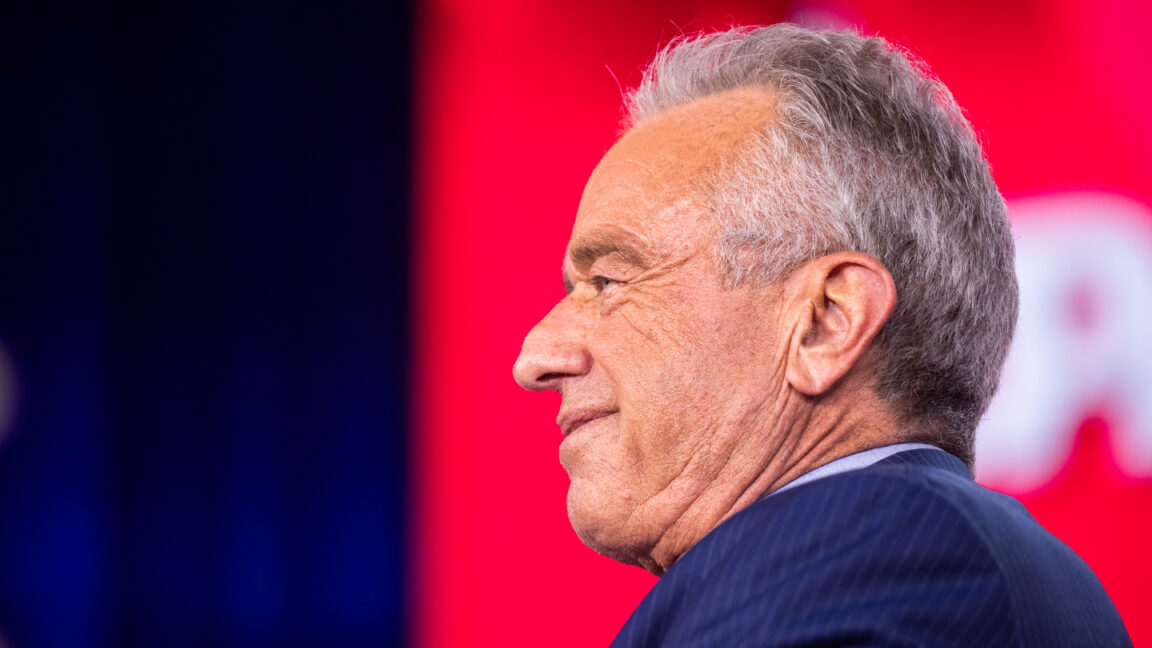
Anti-vaccine changes under RFK Jr. will hurt vulnerable toddlers, study confirms

1 Share

With no new data or clear reasoning, a panel of advisors hand-selected by anti-vaccine Health Secretary Robert F. Kennedy Jr. voted last September to strip federal recommendations for a combination shot against measles, mumps, rubella, and varicella (chickenpox). An analysis published today by independent researchers does the work the advisors neglected to do before the vote and, in turn, shows how harmful the decision is to vulnerable US toddlers.

The decision last fall followed clumsy discussion by Kennedy's dubiously qualified advisors, which make up the Advisory Committee on Immunizations Practices (ACIP) for the Centers for Disease Control and Prevention. Most noticeably, their unprompted review of the MMRV vaccine did not include a standard decision-making framework ACIP has historically used to comprehensively evaluate what the change would mean for US children in practice—including basic questions, such as which children would be affected.

Still, the decision meant that private health insurance providers would no longer be required to cover the vaccine, called MMRV. It also meant the shot would no longer be available through a federal program that provides vaccines to about half of American children, mostly from low-income families.

The study published today in JAMA Network Open set out to assess who was using MMRV before the change. It was done by researchers in Washington state, who examined use of MMRV between 2015 and 2025 in King County, which encompasses Seattle. Reviewing immunization records of over 200,000 toddlers and young children ages 12 to 47 months, they found that a little over 31,000 children got the MMRV in that time period, about 15 percent.

MMRV vs MMR+V

This matches what was already known about the vaccine's use—about 15 percent of kids nationwide get the shot, a small percentage. Most children instead receive a measles, mumps, and rubella shot (MMR) and a separate vaccine against varicella (chickenpox). Usually, the two vaccines are given at the same time, and the co-administration is abbreviated as MMR+V.

The reason the majority of kids get MMR+V is because it's preferred over the single shot based on past data. MMRV earned approval from the Food and Drug Administration in 2005, but after a few years, it became clear that there was a slightly increased risk of febrile seizures when it is given as a first of two doses in toddlers 12 to 15 months (there was no increased risk for the second recommended dose, given at 4 to 6 years).

That increase is slight—there were 7 to 8.5 seizure cases for every 10,000 first-dose MMRV vaccinations, compared to 3.2 to 4.2 in 10,000 first-dose MMR + V vaccinations, analyses found. That difference works out to an extra one febrile seizure per 2,300 to 2,600 children. And febrile seizures are generally harmless—however alarming they may be for a parent to observe. A febrile seizure is simply a seizure associated with fever, and they can be spurred by almost anything that can cause a fever, such as the flu or an ear infection. In almost every case, children fully recover, with no longterm effects. By age 5, about 5 percent of all children have had such a febrile seizure for one reason or another.

Still, given the comparative increase over MMR+V, in 2009 the ACIP of the time combed through the data and decided that MMR+V should be preferred over MMRV. But, MMRV was still considered safe and effective and was left as an option for parents in consultation with their doctors. No new data has changed that view among experts since then.

Vulnerable toddlers

Between 2015 and 2025, use of MMRV among children in King County held steady at 15 percent for the decade, despite the ranked recommendation. And that 15 percent had clear demographic characteristics: Children who got an MMRV as a first-dose were more likely than other vaccinated children to be in minority racial and ethnic groups. By comparison, significantly more of them were getting a "catch-up dose" after the initial window of 12 to 15 months, getting them instead between 16 and 47 months. Children getting an MMRV were also more than three times more likely than other vaccinated children to be eligible for a federal program that offers free vaccines to children in low-income families. They were nearly four times more likely to get vaccinated at a safety-net clinic.

In all, the researchers concluded, "This population might be at risk of not receiving recommended vaccines if options become limited."

In an accompanying commentary piece, health policy experts Elizabeth Cope and Aaron Carroll of the health research nonprofit AcademyHealth blasted Kennedy's ACIP for making their decision without accounting for analyses like this one.

The study's findings "are not surprising," they wrote. "Combination vaccines reduce the number of injections and visits and lower cost barriers to series completion. Those benefits matter most to families with the least slack: hourly work, no paid sick leave, and a follow-up visit that may not happen."

The study has the limitation of only examining MMRV use in one county in one state, Cope and Carroll note. But, they said, "If similar patterns exist in less well-resourced settings, the resulting equity implications could be even more pronounced."

The two experts stop short of suggesting Kennedy's anti-vaccine agenda directly swayed his ACIP members to make this ill-conceived recommendation, saying it can't be determined from the public record. But "[w]hat can be determined is that multiple structural safeguards, historically intended to preserve ACIP independence, were absent simultaneously," they write.

Read full article

Comments


Read the whole story
Share this story
Delete

StubHub CEO is helping fund mass scalpers on his own platform

1 Share
Stubhub CEO Eric Baker is pouring millions of dollars into the ticket-scalping market, CBC reports.

Read the whole story
Share this story
Delete

The case of the mysterious changes to integers when there shouldn’t have been any code generation effect

2 Shares

A colleague made some code changes that should not have had any effect on the generated binary. Specifically, they migrated from the NDIS_STRING_CONST macro to the more type-safe RTL_CONSTANT_STRING macro. The two macros produce the same results at the end of the day, so the expectation was that this would not result in any change to the binary.

But they found a change to the binary.

Specifically, four functions changed, and what is particularly strange is that none of them involved the macro changes. Three of the functions are in one source file, and the fourth is in a source file that wasn’t even touched!

The changes looked like this:

Before After
contoso!Evt­Wdf­Widget­Context­Cleanup
mov rax, [contoso!WdfFunctions_01031]
lea rcx, [??_C@__0DK@MPBCIIPN@...]
mov [rsp+20h], rcx
mov r9d, 62Bh
mov r8d, 52467443h
mov rcx, [contoso!WdfDriverGlobals]
mov rdx, rbx
mov rax, [rax+670h]
call __guard_dispatch_call
mov rax, [contoso!WdfFunctions_01031]
lea rcx, [??_C@__0DK@MPBCIIPN@...]
mov [rsp+20h], rcx
mov r9d, 62Ah
mov r8d, 52467443h
mov rcx, [contoso!WdfDriverGlobals]
mov rdx, rbx
mov rax, [rax+670h]
call __guard_dispatch_call
contoso!Function2
mov rax, [contoso!WdfFunctions_01031]
lea rcx, [??_C@__0DK@MPBCIIPN@...]
mov [rsp+20h], rcx
mov r9d, 616h
mov rcx, [contoso!WdfDriverGlobals]
mov r8d, 52467443h
mov rdx, rdi
mov rax, [rax+668h]
call __guard_dispatch_call
mov rax, [contoso!WdfFunctions_01031]
lea rcx, [??_C@__0DK@MPBCIIPN@...]
mov [rsp+20h], rcx
mov r9d, 615h
mov rcx, [contoso!WdfDriverGlobals]
mov r8d, 52467443h
mov rdx, rdi
mov rax, [rax+668h]
call __guard_dispatch_call
contoso!Function3
mov rax, [contoso!WdfFunctions_01031]
lea rcx, [??_C@__0DK@MPBCIIPN@...]
mov [r11-20h], rcx
xor r8d, r8d
mov rcx, [contoso!WdfDriverGlobals]
mov r9d, 35Dh
mov rax, [rax+0DB0h]
call __guard_dispatch_call
mov rax, [contoso!WdfFunctions_01031]
lea rcx, [??_C@__0DK@MPBCIIPN@...]
mov [r11-20h], rcx
xor r8d, r8d
mov rcx, [contoso!WdfDriverGlobals]
mov r9d, 35Ch
mov rax, [rax+0DB0h]
call __guard_dispatch_call
contoso!Function4
mov rax, [contoso!WdfFunctions_01031]
lea rcx, [??_C@__0DK@MPBCIIPN@...]
mov rdx, [rbp+8]
mov r9d, 377h
mov [rsp+20h], rcx
mov r8d, 49507443h
mov rcx, [contoso!WdfDriverGlobals]
mov rax, [rax+0DB8h]
call __guard_dispatch_call
mov rax, [contoso!WdfFunctions_01031]
lea rcx, [??_C@__0DK@MPBCIIPN@...]
mov rdx, [rbp+8]
mov r9d, 376h
mov [rsp+20h], rcx
mov r8d, 49507443h
mov rcx, [contoso!WdfDriverGlobals]
mov rax, [rax+0DB8h]
call __guard_dispatch_call

In all of the cases, the change is that a single integer changed to a value one smaller.

My colleague asked an LLM to explain this change, and it suggested that the changes were related to control flow guard metadata. Does this make sense?

It didn’t make sense to me, on two points. First, for the guard dispatch call, the only parameter to control flow guard is the rax register, which is the function being checked. All the other registers contain the parameters to the called function. Since the changes are to the r9d register, they are not related to control flow guard.

Second, the control flow guard metadata is not stored in code. It’s stored as a data block inside the binary.

So what are we seeing?

I took a look a Evt­Wdf­Widget­Context­Cleanup.

void EvtWdfWidgetContextCleanup(_In_ WDFOBJECT Object)
{
    auto widgetContext = GetContextFromWidgetHandle(Object);
    if (widgetContext->NeedsDereference)
    {
        widgetContext->NeedsDereference = FALSE;
        WdfObjectDereferenceWithTag(Object, CONTOSO_WIDGET_TAG);
    }
}

The compiler points to the Wdf­Object­Dereference­With­Tag as the location of the change. And we see that it is defined as a macro:

#define WdfObjectDereferenceWithTag(Handle, Tag) \
        WdfObjectDereferenceActual(Handle, Tag, __LINE__, __FILE__)

which is itself an inline function:

_IRQL_requires_max_(DISPATCH_LEVEL)
VOID
FORCEINLINE
WdfObjectReferenceActual(
    _In_
    WDFOBJECT Handle,
    _In_opt_
    PVOID Tag,
    _In_
    LONG Line,
    _In_z_
    PCCH File
    )
{
    ((PFN_WDFOBJECTREFERENCEACTUAL) WdfFunctions[WdfObjectReferenceActualTableIndex])
        (WdfDriverGlobals, Handle, Tag, Line, File);
}

The last little detail is that WdfFunctions is a macro that expands to WdfFunctions_01031. The WDF header files give each version a unique name so that mismatched versions lead to a linker error rather than undefined behavior at runtime.

Now we can see how this code maps to the compiler output.

    mov rax, [contoso!WdfFunctions_01031]   ; WdfFunctions
    lea rcx, [??_C@__0DK@MPBCIIPN@...]      ; Address of something
    mov [rsp+20h], rcx                      ; is the File parameter
    mov r9d, 62Bh                           ; Line parameter
    mov r8d, 52467443h                      ; Tag parameter
    mov rcx, [contoso!WdfDriverGlobals]     ; hard-coded parameter
    mov rdx, rbx                            ; Handle parameter
    mov rax, [rax+670h]                     ; Load the function pointer
    call __guard_dispatch_call              ; Validate and call¹

So the value that changed is the line number.

I went back to the pull request and observed that the pull requested deleted a line from the source file.

#include <strsafe.h>
#include "stringutils.h"

Part of the pull request included deleting the no-longer-needed header because it contained a private definition of the NDIS_STRING_CONST macro, which the code no longer uses.

Deleting a line from the source file causes all the line numbers to shift by one!

So what they were seeing was just a change to the line numbers. No change in functionality.

If they really wanted to make this a “no binary effect” change, they could replace the #include "stringutils.h with a comment or just leave it as a blank line.

Or they could just accept that line numbers can change when you change lines.

Bonus chatter: But wait, I said that three of the changes were in one file, the one with the deleted line, but a fourth was in a file that didn’t change at all. What’s that about?

The fourth function contained a call to a function in the modified file, and link-time code generation decided to inline that call. The changed line number propagated into the inline function and resulted in a code generation change in a file that wasn’t even affected by the pull request.

¹ Recall that in the validate-and-call pattern, the function pointer is passed in the rax register, and everthing else is set up as if you were calling the function yourself.

The post The case of the mysterious changes to integers when there shouldn’t have been any code generation effect appeared first on The Old New Thing.

Read the whole story
Share this story
Delete

OpenAI may have made a fatal misstep in copyright fight with news orgs

1 Share

OpenAI is facing calls for "serious sanctions" after fighting to keep news organizations from snooping through millions of logs to find evidence of users skirting their paywalls by prompting ChatGPT to regurgitate their articles.

This evidence is considered among the most important to both sides, potentially either dooming OpenAI as an infringer or exonerating its chatbot technology as a transformative fair use of news sites' content.

In a sanctions motion Thursday, news organizations suing OpenAI—led by The New York Times—accused the AI firm of repeatedly lying for years to conceal evidence of infringement that could hobble OpenAI's defense.

These alleged lies were exposed when the court compelled an “ill-prepared witness,” OpenAI privacy engineer Vincent Monaco, to be re-deposed. During the subsequent April deposition, he inadvertently revealed that OpenAI misled the court for two years about the cost and burdens of searching ChatGPT logs, NYT’s filing said.

Among the most shocking revelations, OpenAI allegedly pretended from the earliest stages of the case that it did not have the technical ability to search large anonymized samples of ChatGPT logs when it had actually already conducted such searches prior to the start of litigation, NYT alleged.

Sanctions are warranted because “OpenAI's concealment of this fact withheld highly relevant evidence, prolonged discovery, inflated expenses, and burdened the Court,” news plaintiffs alleged.

Asked for comment, an OpenAI spokesperson suggested that NYT's sanctions motion was a late litigation effort to access more logs and infringe more users' privacy. The spokesperson claimed that when the NYT recently dropped some claims in the lawsuit, it was a sign that news plaintiffs' case was crumbling, not OpenAI's defense.

"As the Times’ case weakens and they’ve been forced to drop claims against us, they’re persisting with their efforts to invade the privacy of people who have nothing to do with this case, including by making these blatantly false allegations," OpenAI's spokesperson said. "We'll continue defending our users’ privacy and the long-established principles of fair use.”

However, last month, NYT spokesperson Graham James disputed to Ars that news plaintiffs' case was weakened by dropping claims. He suggested instead the suit was streamlined and strengthened by adding claims against Microsoft. "Our core claims remain the same from the day we filed this lawsuit—that Microsoft and OpenAI stole millions of The Times’s copyrighted works to compete with our products and illegally enrich themselves,” James said.

OpenAI allegedly hid 80M log sample

Although the sanctions motion is heavily redacted, it’s alleged that Monaco testified that OpenAI had two large samples—spanning 10 million and 78 million logs—which had already been de-identified and could have been made available to news plaintiffs early on to maximize the discovery period.

“Not once did OpenAI disclose the existence” of those samples over two years, news plaintiffs alleged.

Even more frustrating to plaintiffs, OpenAI had already searched those samples for NYT content as part of its research into “creating a filter that could be used to block the regurgitation of copyrighted content,” the court filing said.

“OpenAI was willing and able to search its output logs—when it benefitted OpenAI,” NYT alleged, accusing the ChatGPT maker of “making the discovery process as burdensome as possible.”

Court says OpenAI sample is "unusable"

In a statement to Ars, NYT’s lead counsel, Ian Crosby, suggested that OpenAI obstructed access to logs and distorted evidence to shield its fair use claims.

“For over two years, OpenAI lied to The Times, The Daily News Plaintiffs, the public, and the court,” Crosby said. “It claimed searching ChatGPT outputs for copies of The Times’ and the Daily News Plaintiffs’ content was infeasible, burdensome, and invasive of users' privacy—while at the same time concealing that it had already done such searches. If OpenAI genuinely believed that copying our clients’ journalism was fair and legal, it wouldn’t have hid the truth about having done it.”

Instead of being transparent about the existing samples, OpenAI forced news plaintiffs to spend eight months searching in a “sandbox,” where they could only access a heavily redacted sample of 20 million logs. That sample was much smaller than the 120 million news logs plaintiffs originally requested, allegedly narrowed due to OpenAI’s “false representations regarding its existing technical capabilities” to search larger samples.

“This representation is belied by Mr. Monaco's testimony that OpenAI already had the ability” to search “large datasets, such as the more than 80 million output logs,” NYT alleged.

The 20 million log sample was further “skewed” when OpenAI used AI to make 19 billion redactions to the sample—so many that the court found the sample “unusable.”

Eventually, OpenAI removed some of the redactions, but “even then, a large number of redactions remain, including to News Plaintiffs’ domains, names, and other fields, which has hampered News Plaintiffs’ searches over the data,” NYT alleged.

Meanwhile, “the entire time that OpenAI was engaging in the improper over-redaction of this sample, it had in its possession a sample of 78 million conversations that had already been de-identified,” NYT alleged.

“OpenAI did not just oppose production of this evidence based on burden or relevance; it falsely represented to the Court that obtaining this evidence was beyond its capabilities without the expenditure of and months of work and that it would be just as easy for Plaintiffs to do this work—without disclosing that this work had already been done,” news plaintiffs alleged.

Similarly frustrating were dragged-out meet-and-confers over data searches that news plaintiffs claimed further limited discovery. For example, very close to discovery ending, OpenAI confusingly claimed that the 78 million log samples had been available for inspection for “over a year,” NYT alleged. However, “this makes no sense,” news plaintiffs argued, considering OpenAI’s very public fight to supposedly defend ChatGPT user privacy by blocking access to any logs beyond the 20 million sample.

“Either OpenAI unintentionally produced the dataset and it was so hidden in the training inspection data that even OpenAI did not realize it, or OpenAI knew it buried the dataset in a previous production, but hid that fact from the Court and News Plaintiffs for nearly two years—all the while vigorously arguing that turning over these logs would violate user privacy,” NYT argued.

Additionally, news plaintiffs accused OpenAI of other misconduct to obstruct access to evidence. Although the exact amount is redacted, OpenAI randomly deleted some parts of that limited 20 million sample, they alleged. And that's on top of allegedly deleting or compressing billions of logs that should have been preserved. According to NYT, OpenAI's witness testified that OpenAI simply "decided" that complying with the court's sweeping preservation order to retain all chats "would be hard; and thus took no steps to do so."

“There can be no question as to the wilfulness of OpenAI’s conduct, nor any excuse for its non-compliance. According to Mr. Monaco, OpenAI thought about complying with the Court’s Preservation Order, but then decided not to,” NYT alleged.

"Serious sanctions" necessary

News organizations claim that they do not request sanctions against OpenAI “lightly” but that the “severity” of OpenAI’s alleged misconduct requires sanctions to punish the AI firm and deter any other AI firms from following a similar playbook.

Requesting “severe” sanctions, news plaintiffs want the court to prohibit OpenAI from using the 20 million sample that it fought so hard for. They have further asked the court to find that withheld output logs included “substantial” “regurgitation of News Plaintiffs’ copyrighted material” and to block OpenAI from arguing otherwise. Finally, the jury would be instructed that OpenAI deleted billions of logs, which would play into news plaintiffs’ narrative that OpenAI has been moving in shady ways to obscure alleged substitution in the market since the case began.

“Lesser sanctions would not be effective,” news plaintiffs warned. In fact,“serious sanctions are especially appropriate," they said, because OpenAI’s misconduct “was knowing and intentional.”

If the court agrees that OpenAI’s misconduct was “egregious,” OpenAI’s attempt to constrict news organizations’ access to logs could end up being a fatal misstep in this intently watched copyright fight.

Whether training on copyrighted content is fair use will likely depend on whether news organizations can establish market harms, and OpenAI’s defense could be substantially set back if its massively redacted sample is rejected and if that makes it harder to argue substantial infringement did not occur.

Read full article

Comments


Read the whole story
Share this story
Delete

Parents' Phone Addiction Affects Bond With Kids, New Study Finds

1 Share
An anonymous reader quotes a report from Bloomberg: Parents' attachment to screens and smartphones can have negative, long-lasting developmental and psychological effects on their children, according to new research. Caregivers who mismanage their devices can both exacerbate "insecure attachment" and make healthy relationships more anxious and avoidant for children, according to the findings, which were published last month in Frontiers in Psychology, a peer-reviewed journal. The study, which surveyed 600 minors in the US from 12 to 17 years old, found that kids reported feeling marginalized or neglected by parents glued to their screens. "A child with insecure attachment may lack confidence or display a lower sense of self; demonstrate difficulty with interpersonal relationships and intimacy; and possess an unwillingness to take risks necessary to achieve success," reports Bloomberg, citing one of the study's researchers. This type of behavior has become normalized: 2024 Pew data found that nearly half of U.S. teens say their parents are at least sometimes distracted by phones during interactions. "When parents were asked about their own behavior, far fewer said this was an issue," the report adds. "Still, earlier Pew data from 2020 found most parents feel their phones can interfere with quality family time, with 68% reporting being 'at least sometimes' distracted by them.

Read more of this story at Slashdot.

Read the whole story
Share this story
Delete
Next Page of Stories